
The 10 Questions AI Should Be Able to Answer About Your Business
The 10 Questions AI Should Be Able to Answer About Your Business
The 10 Questions AI Should Be Able to Answer About Your Business
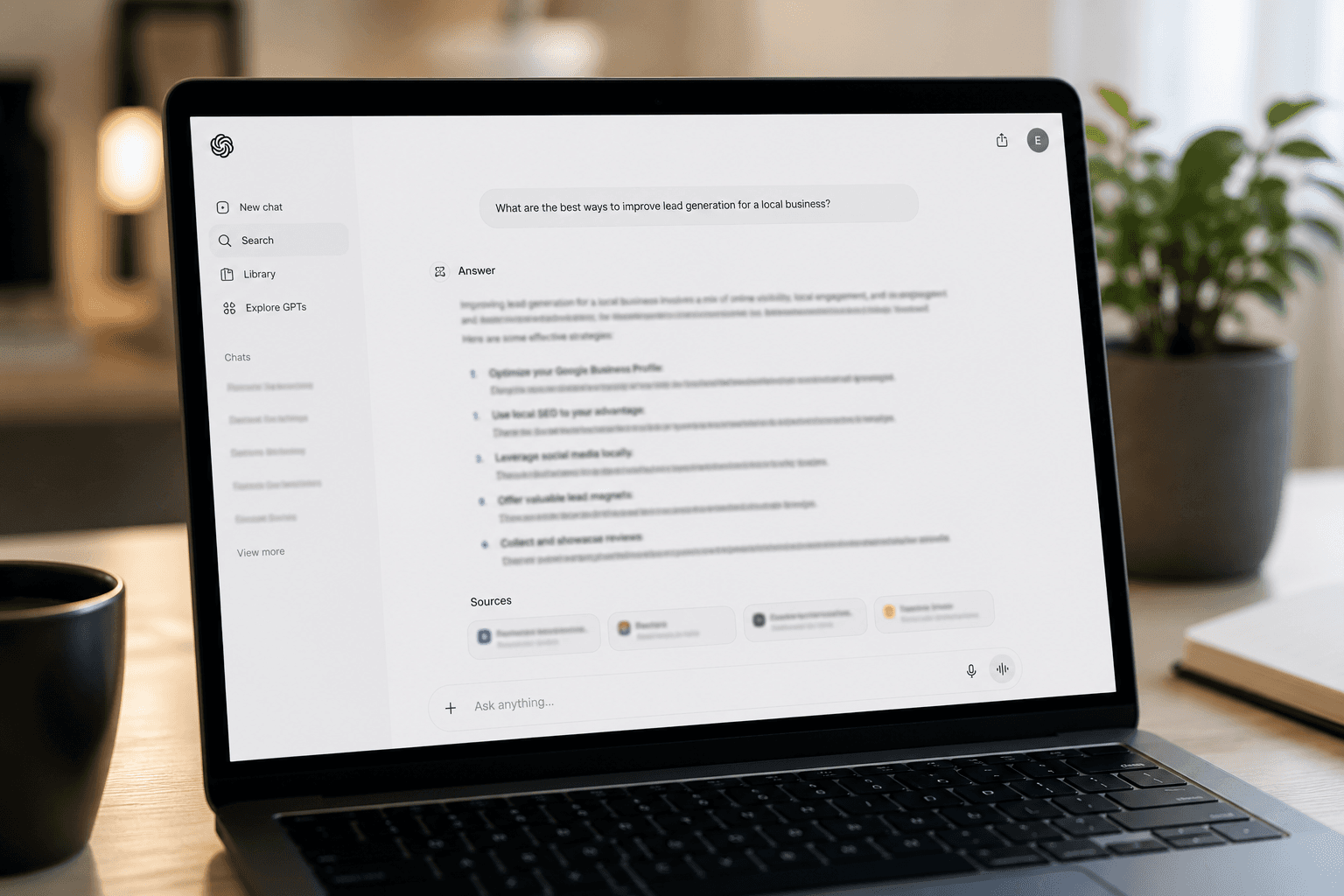
There is a simple test you can do right now to understand how visible your business is in AI search. Open ChatGPT, Perplexity or Google and ask it the kind of question a potential client would ask when looking for a business like yours in your area. Something like "what is the best clinic for [treatment] in [city]" or "where can I get [service] done in [area]". See what comes back. If your business appears with accurate, useful information, you are in reasonably good shape. If a competitor appears instead, or if the answer is vague, generic or names no specific local businesses at all, there is work to do. The reason AI tools cannot answer well about some businesses is almost always the same: the information on the website and across other online sources is not clear, specific or well-organised enough for an AI to confidently extract and use. This post gives you the 10 specific questions AI should be able to answer about your business, why each one matters and what you need to have in place for the answer to be there.
Why These 10 Questions Matter
AI tools construct answers to search queries by pulling information from multiple sources: your website, your Google Business Profile, directories, review platforms and any structured data you have in place. When the right information is present and clearly organised, the AI can answer confidently and may include your business in a response. When it is missing, ambiguous or inconsistent, the AI either skips your business or gives a vague answer that fails to serve the person asking.
Why These 10 Questions Matter
AI tools construct answers to search queries by pulling information from multiple sources: your website, your Google Business Profile, directories, review platforms and any structured data you have in place. When the right information is present and clearly organised, the AI can answer confidently and may include your business in a response. When it is missing, ambiguous or inconsistent, the AI either skips your business or gives a vague answer that fails to serve the person asking.
Why These 10 Questions Matter
AI tools construct answers to search queries by pulling information from multiple sources: your website, your Google Business Profile, directories, review platforms and any structured data you have in place. When the right information is present and clearly organised, the AI can answer confidently and may include your business in a response. When it is missing, ambiguous or inconsistent, the AI either skips your business or gives a vague answer that fails to serve the person asking.
The 10 questions below represent the most common types of query that potential clients use when discovering and evaluating local appointment businesses. Each one maps to a type of content or information that should be clearly present on your website or in your online profiles.
The 10 questions below represent the most common types of query that potential clients use when discovering and evaluating local appointment businesses. Each one maps to a type of content or information that should be clearly present on your website or in your online profiles.
The 10 Questions
1. What type of business is this and what does it specialise in?
This is the most fundamental question and the one that most businesses answer badly. A website homepage that says "premium aesthetic clinic" or "specialist detailing studio" in the hero text is a starting point. But the AI needs more than a label. It needs enough specific context to understand what category the business belongs in, what it does differently to a generic provider and who it is for.
What to have in place: a clear, specific business description on your homepage and About page that names your specialisms explicitly. Not "we offer a range of treatments" but "we specialise in body contouring, RF microneedling and high-end facial treatments for clients in [area]."
2. What specific services do you offer?
A services page that lists treatment names without descriptions is not enough. AI tools cannot infer what a treatment involves from a name alone. Each service needs a brief, clear description that explains what it is, what it does and who it is for.
What to have in place: individual service pages or well-structured service sections with specific descriptions for each offering. The more precisely services are named and described, the more likely the AI is to surface them in response to a specific service query.
3. Where are you located and what areas do you serve?
Local AI answers depend heavily on location data. A business that mentions its city name once in the footer and nowhere else is harder for an AI to place confidently than one that references its location naturally throughout its content, including in service page introductions, the About page and the Google Business Profile.
What to have in place: your location mentioned clearly and naturally on multiple pages, your full address on your contact page, your Google Business Profile fully completed with accurate location data and your service area described if you cover multiple areas or travel to clients.
4. How much do your services cost?
Pricing is one of the questions potential clients are most likely to ask before making an enquiry. AI tools that can provide a pricing range or starting point for a service are more useful to the searcher and more likely to be trusted than ones that cannot. A business that provides clear pricing guidance is more likely to be cited in a useful answer.
What to have in place: pricing information on service pages, even if only as a starting-from figure or a range. If exact pricing varies, a brief explanation of what affects the cost is sufficient. The absence of any pricing information is the most common gap in local business AEO.
5. Is this service suitable for me?
Eligibility and suitability questions are particularly common in aesthetic, medical and premium service categories. A potential client considering a treatment wants to know whether it is appropriate for their situation before they make an enquiry. An AI that can answer this question with information from your website is more likely to send a qualified, ready-to-book lead to your business.
The 10 Questions
1. What type of business is this and what does it specialise in?
This is the most fundamental question and the one that most businesses answer badly. A website homepage that says "premium aesthetic clinic" or "specialist detailing studio" in the hero text is a starting point. But the AI needs more than a label. It needs enough specific context to understand what category the business belongs in, what it does differently to a generic provider and who it is for.
What to have in place: a clear, specific business description on your homepage and About page that names your specialisms explicitly. Not "we offer a range of treatments" but "we specialise in body contouring, RF microneedling and high-end facial treatments for clients in [area]."
2. What specific services do you offer?
A services page that lists treatment names without descriptions is not enough. AI tools cannot infer what a treatment involves from a name alone. Each service needs a brief, clear description that explains what it is, what it does and who it is for.
What to have in place: individual service pages or well-structured service sections with specific descriptions for each offering. The more precisely services are named and described, the more likely the AI is to surface them in response to a specific service query.
3. Where are you located and what areas do you serve?
Local AI answers depend heavily on location data. A business that mentions its city name once in the footer and nowhere else is harder for an AI to place confidently than one that references its location naturally throughout its content, including in service page introductions, the About page and the Google Business Profile.
What to have in place: your location mentioned clearly and naturally on multiple pages, your full address on your contact page, your Google Business Profile fully completed with accurate location data and your service area described if you cover multiple areas or travel to clients.
4. How much do your services cost?
Pricing is one of the questions potential clients are most likely to ask before making an enquiry. AI tools that can provide a pricing range or starting point for a service are more useful to the searcher and more likely to be trusted than ones that cannot. A business that provides clear pricing guidance is more likely to be cited in a useful answer.
What to have in place: pricing information on service pages, even if only as a starting-from figure or a range. If exact pricing varies, a brief explanation of what affects the cost is sufficient. The absence of any pricing information is the most common gap in local business AEO.
5. Is this service suitable for me?
Eligibility and suitability questions are particularly common in aesthetic, medical and premium service categories. A potential client considering a treatment wants to know whether it is appropriate for their situation before they make an enquiry. An AI that can answer this question with information from your website is more likely to send a qualified, ready-to-book lead to your business.
The 10 Questions
1. What type of business is this and what does it specialise in?
This is the most fundamental question and the one that most businesses answer badly. A website homepage that says "premium aesthetic clinic" or "specialist detailing studio" in the hero text is a starting point. But the AI needs more than a label. It needs enough specific context to understand what category the business belongs in, what it does differently to a generic provider and who it is for.
What to have in place: a clear, specific business description on your homepage and About page that names your specialisms explicitly. Not "we offer a range of treatments" but "we specialise in body contouring, RF microneedling and high-end facial treatments for clients in [area]."
2. What specific services do you offer?
A services page that lists treatment names without descriptions is not enough. AI tools cannot infer what a treatment involves from a name alone. Each service needs a brief, clear description that explains what it is, what it does and who it is for.
What to have in place: individual service pages or well-structured service sections with specific descriptions for each offering. The more precisely services are named and described, the more likely the AI is to surface them in response to a specific service query.
3. Where are you located and what areas do you serve?
Local AI answers depend heavily on location data. A business that mentions its city name once in the footer and nowhere else is harder for an AI to place confidently than one that references its location naturally throughout its content, including in service page introductions, the About page and the Google Business Profile.
What to have in place: your location mentioned clearly and naturally on multiple pages, your full address on your contact page, your Google Business Profile fully completed with accurate location data and your service area described if you cover multiple areas or travel to clients.
4. How much do your services cost?
Pricing is one of the questions potential clients are most likely to ask before making an enquiry. AI tools that can provide a pricing range or starting point for a service are more useful to the searcher and more likely to be trusted than ones that cannot. A business that provides clear pricing guidance is more likely to be cited in a useful answer.
What to have in place: pricing information on service pages, even if only as a starting-from figure or a range. If exact pricing varies, a brief explanation of what affects the cost is sufficient. The absence of any pricing information is the most common gap in local business AEO.
5. Is this service suitable for me?
Eligibility and suitability questions are particularly common in aesthetic, medical and premium service categories. A potential client considering a treatment wants to know whether it is appropriate for their situation before they make an enquiry. An AI that can answer this question with information from your website is more likely to send a qualified, ready-to-book lead to your business.
What to have in place: suitability notes on individual service pages. Who is a good candidate for this treatment? Are there any contraindications or requirements? This information also demonstrates expertise and builds trust with human readers.
What to have in place: suitability notes on individual service pages. Who is a good candidate for this treatment? Are there any contraindications or requirements? This information also demonstrates expertise and builds trust with human readers.

6. How do I book an appointment?
The booking process question is one of the most practically important for an AI to answer, because a client who knows how to book is far closer to doing so than one who has to navigate your website to find out. An AI that can tell someone "you can book online through their website or message them on WhatsApp" is providing a complete, actionable answer.
What to have in place: a clear booking explanation on your website and in your Google Business Profile, with a direct booking link included wherever possible. The fewer steps between the AI answer and the actual booking, the higher the conversion.
7. What should I expect from the appointment?
Appointment experience questions reduce anxiety and friction for first-time clients. A business that can answer "what happens during a [treatment] appointment" through its website content is giving potential clients the confidence to book rather than hesitate. AI tools that can answer this question from your content are doing the pre-qualification work for you.
What to have in place: a brief "what to expect" section on each key service page. The process, the duration, any preparation required and what happens after the appointment. This content directly addresses the question clients are most commonly too embarrassed to ask directly.
8. How long do results last and when will I see them?
Outcome and timeline questions are among the highest-intent queries in aesthetic and premium service categories. A client asking how long the results of a treatment last is close to a booking decision. An AI that can answer this confidently from your content is surfacing your business at the exact moment of highest intent.
What to have in place: results and timeline information on service pages. When results are typically visible, how long they last and what affects longevity. This is specific, trustworthy content that both AI tools and human readers find valuable.
9. What do your clients say about the experience?
Review content is a source AI tools draw on when constructing assessments of local businesses. A business with a strong, recent review profile across Google and relevant directories is more likely to be cited positively in an AI answer than one with sparse or dated reviews.
What to have in place: an active review generation process that keeps your review profile current. Recent, specific reviews that mention individual services by name are the most useful for AI tools trying to understand what a business is known for. A post-appointment review request sequence, as covered in Blog 20, is the structural way to maintain this.
10. Are you open, and how do I get in touch?
The most basic questions are sometimes the ones that cause the most problems. Outdated opening hours, a phone number that is no longer active or a contact page that does not include a direct response route are the kind of gaps that cause an AI to hesitate before recommending a business or cause the recommendation to be incomplete.
What to have in place: current, accurate opening hours across your website and Google Business Profile. A working contact number, a clearly positioned email or WhatsApp option and an up-to-date response method that reflects how your business actually operates.
6. How do I book an appointment?
The booking process question is one of the most practically important for an AI to answer, because a client who knows how to book is far closer to doing so than one who has to navigate your website to find out. An AI that can tell someone "you can book online through their website or message them on WhatsApp" is providing a complete, actionable answer.
What to have in place: a clear booking explanation on your website and in your Google Business Profile, with a direct booking link included wherever possible. The fewer steps between the AI answer and the actual booking, the higher the conversion.
7. What should I expect from the appointment?
Appointment experience questions reduce anxiety and friction for first-time clients. A business that can answer "what happens during a [treatment] appointment" through its website content is giving potential clients the confidence to book rather than hesitate. AI tools that can answer this question from your content are doing the pre-qualification work for you.
What to have in place: a brief "what to expect" section on each key service page. The process, the duration, any preparation required and what happens after the appointment. This content directly addresses the question clients are most commonly too embarrassed to ask directly.
8. How long do results last and when will I see them?
Outcome and timeline questions are among the highest-intent queries in aesthetic and premium service categories. A client asking how long the results of a treatment last is close to a booking decision. An AI that can answer this confidently from your content is surfacing your business at the exact moment of highest intent.
What to have in place: results and timeline information on service pages. When results are typically visible, how long they last and what affects longevity. This is specific, trustworthy content that both AI tools and human readers find valuable.
9. What do your clients say about the experience?
Review content is a source AI tools draw on when constructing assessments of local businesses. A business with a strong, recent review profile across Google and relevant directories is more likely to be cited positively in an AI answer than one with sparse or dated reviews.
What to have in place: an active review generation process that keeps your review profile current. Recent, specific reviews that mention individual services by name are the most useful for AI tools trying to understand what a business is known for. A post-appointment review request sequence, as covered in Blog 20, is the structural way to maintain this.
10. Are you open, and how do I get in touch?
The most basic questions are sometimes the ones that cause the most problems. Outdated opening hours, a phone number that is no longer active or a contact page that does not include a direct response route are the kind of gaps that cause an AI to hesitate before recommending a business or cause the recommendation to be incomplete.
What to have in place: current, accurate opening hours across your website and Google Business Profile. A working contact number, a clearly positioned email or WhatsApp option and an up-to-date response method that reflects how your business actually operates.

How to Check Your Current AI Visibility
The practical audit for these 10 questions takes about 20 minutes. Open ChatGPT or Perplexity and ask each of the question types above in the form a real client would use, referencing your specific service category and location. Make a note of whether your business appears, what information is cited and whether the answer is accurate.
Then open Google and check your AI Overview appearance for your core service and location search terms. Review your Google Business Profile completeness against the 10 question areas above.
The gaps that appear in this audit are your AEO priority list. Start with the highest-traffic questions and the ones where competitors are currently appearing in your place.
How to Check Your Current AI Visibility
The practical audit for these 10 questions takes about 20 minutes. Open ChatGPT or Perplexity and ask each of the question types above in the form a real client would use, referencing your specific service category and location. Make a note of whether your business appears, what information is cited and whether the answer is accurate.
Then open Google and check your AI Overview appearance for your core service and location search terms. Review your Google Business Profile completeness against the 10 question areas above.
The gaps that appear in this audit are your AEO priority list. Start with the highest-traffic questions and the ones where competitors are currently appearing in your place.
How to Check Your Current AI Visibility
The practical audit for these 10 questions takes about 20 minutes. Open ChatGPT or Perplexity and ask each of the question types above in the form a real client would use, referencing your specific service category and location. Make a note of whether your business appears, what information is cited and whether the answer is accurate.
Then open Google and check your AI Overview appearance for your core service and location search terms. Review your Google Business Profile completeness against the 10 question areas above.
The gaps that appear in this audit are your AEO priority list. Start with the highest-traffic questions and the ones where competitors are currently appearing in your place.
FAQ
Do I need to write new pages to answer all 10 questions?
Not necessarily. In many cases, the answers can be added to existing pages as FAQ sections or short additions to service page copy. A full new page is only required where the question maps to a topic that does not currently have any dedicated coverage.
What if I do not want to publish pricing publicly?
A starting-from figure or a price range is sufficient for most AI and human visitor purposes. "From £X" gives enough context for a potential client to assess basic fit without committing you to a fixed rate for every scenario.
How often should I update this content?
Service descriptions and pricing guidance should be reviewed every three to six months. Opening hours, contact details and booking links should be checked monthly to ensure accuracy across all platforms.
Does answering these questions on my website guarantee I will appear in AI answers?
No. AI search visibility is influenced by many factors including the authority and age of your domain, the quality of your review profile and how consistently your information appears across different sources. Answering these questions clearly removes the most common barrier but does not override all other factors.
FAQ
Do I need to write new pages to answer all 10 questions?
Not necessarily. In many cases, the answers can be added to existing pages as FAQ sections or short additions to service page copy. A full new page is only required where the question maps to a topic that does not currently have any dedicated coverage.
What if I do not want to publish pricing publicly?
A starting-from figure or a price range is sufficient for most AI and human visitor purposes. "From £X" gives enough context for a potential client to assess basic fit without committing you to a fixed rate for every scenario.
How often should I update this content?
Service descriptions and pricing guidance should be reviewed every three to six months. Opening hours, contact details and booking links should be checked monthly to ensure accuracy across all platforms.
Does answering these questions on my website guarantee I will appear in AI answers?
No. AI search visibility is influenced by many factors including the authority and age of your domain, the quality of your review profile and how consistently your information appears across different sources. Answering these questions clearly removes the most common barrier but does not override all other factors.
FAQ
Do I need to write new pages to answer all 10 questions?
Not necessarily. In many cases, the answers can be added to existing pages as FAQ sections or short additions to service page copy. A full new page is only required where the question maps to a topic that does not currently have any dedicated coverage.
What if I do not want to publish pricing publicly?
A starting-from figure or a price range is sufficient for most AI and human visitor purposes. "From £X" gives enough context for a potential client to assess basic fit without committing you to a fixed rate for every scenario.
How often should I update this content?
Service descriptions and pricing guidance should be reviewed every three to six months. Opening hours, contact details and booking links should be checked monthly to ensure accuracy across all platforms.
Does answering these questions on my website guarantee I will appear in AI answers?
No. AI search visibility is influenced by many factors including the authority and age of your domain, the quality of your review profile and how consistently your information appears across different sources. Answering these questions clearly removes the most common barrier but does not override all other factors.