
Top 8 Missed-Call Text Back Solutions (SMS + WhatsApp) Compared
Top 8 Missed-Call Text Back Solutions (SMS + WhatsApp) Compared
Top 8 Missed-Call Text Back Solutions (SMS + WhatsApp) Compared
Missed call text back is one of the highest-return automation investments available to an appointment business. The concept is simple: when an inbound call goes unanswered, the system immediately sends a text message to the caller's number, acknowledges the missed call and opens a follow-up conversation that can lead to a booking. The simplicity of the concept has produced a market full of tools that all claim to do it. What they actually deliver varies enormously, from a basic SMS template that fires once and does nothing else, to a full conversational flow that qualifies the lead and books them into a real calendar. This post separates the categories of solution, compares the eight most relevant options for appointment businesses, explains which scenarios each one fits best and covers the specific things to check before committing.
What "Missed Call Text Back" Actually Means
The phrase covers a wider range of functionality than it implies. At the minimum, it means an automated text message is sent when a call is missed. At the maximum, it means a full multi-turn AI conversation that identifies the caller, qualifies their enquiry, sends a booking link and confirms the appointment, all without a human being involved.
The trigger mechanism is the first variable. Some solutions trigger from a call forwarding setup: the call forwards to a number managed by the platform, the platform detects the missed call and fires the message. Others integrate directly with a business phone system and trigger from the system's missed call event. Others require a custom integration via a tool like Make or Zapier.
The channel is the second variable. SMS is universally available but open rates and response rates are lower than WhatsApp for most demographics in the UK. WhatsApp is the higher-performing channel for appointment businesses but requires compliance with the WhatsApp Business API, which involves approved message templates and number registration.
What "Missed Call Text Back" Actually Means
The phrase covers a wider range of functionality than it implies. At the minimum, it means an automated text message is sent when a call is missed. At the maximum, it means a full multi-turn AI conversation that identifies the caller, qualifies their enquiry, sends a booking link and confirms the appointment, all without a human being involved.
The trigger mechanism is the first variable. Some solutions trigger from a call forwarding setup: the call forwards to a number managed by the platform, the platform detects the missed call and fires the message. Others integrate directly with a business phone system and trigger from the system's missed call event. Others require a custom integration via a tool like Make or Zapier.
The channel is the second variable. SMS is universally available but open rates and response rates are lower than WhatsApp for most demographics in the UK. WhatsApp is the higher-performing channel for appointment businesses but requires compliance with the WhatsApp Business API, which involves approved message templates and number registration.
What "Missed Call Text Back" Actually Means
The phrase covers a wider range of functionality than it implies. At the minimum, it means an automated text message is sent when a call is missed. At the maximum, it means a full multi-turn AI conversation that identifies the caller, qualifies their enquiry, sends a booking link and confirms the appointment, all without a human being involved.
The trigger mechanism is the first variable. Some solutions trigger from a call forwarding setup: the call forwards to a number managed by the platform, the platform detects the missed call and fires the message. Others integrate directly with a business phone system and trigger from the system's missed call event. Others require a custom integration via a tool like Make or Zapier.
The channel is the second variable. SMS is universally available but open rates and response rates are lower than WhatsApp for most demographics in the UK. WhatsApp is the higher-performing channel for appointment businesses but requires compliance with the WhatsApp Business API, which involves approved message templates and number registration.
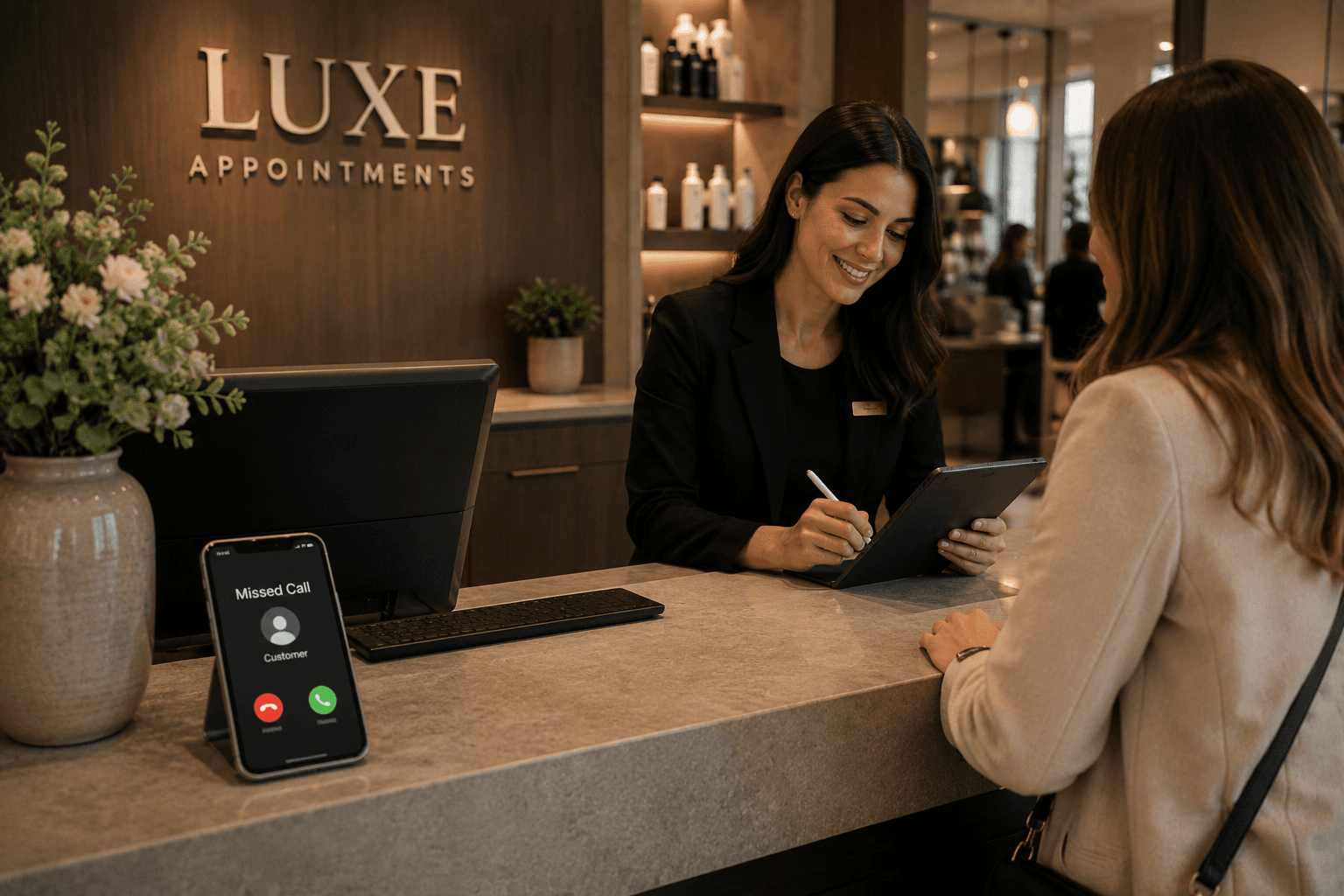
The conversation depth is the third variable. A single automated text that says "sorry we missed your call, we will be in touch" has almost no commercial value beyond the gesture. A conversational flow that asks what the caller was looking for and routes them toward a booking link is where the actual revenue recovery happens.
The conversation depth is the third variable. A single automated text that says "sorry we missed your call, we will be in touch" has almost no commercial value beyond the gesture. A conversational flow that asks what the caller was looking for and routes them toward a booking link is where the actual revenue recovery happens.
SMS vs WhatsApp: The Channel Decision
Before comparing specific tools, the SMS versus WhatsApp decision is worth addressing directly because it affects which solutions are relevant.
WhatsApp is the stronger channel for missed call recovery in the UK for most appointment business categories. Open rates are higher, response rates are higher and the conversational feel of WhatsApp is better suited to a qualification exchange than the notification-style feel of SMS. For premium services where the client experience matters, WhatsApp's register also matches the brand expectations better.
The trade-off is compliance complexity. WhatsApp Business API requires approved message templates for first messages to new contacts. The registration process for a WhatsApp Business number takes time and the template approval process is ongoing. Not every solution handles this compliantly, and a tool that sends non-template WhatsApp messages to new contacts is creating compliance risk.
SMS is simpler to implement, universally compatible and appropriate as a fallback for clients who are not active on WhatsApp. For markets or demographics where WhatsApp adoption is lower, SMS may be the primary rather than secondary channel.
SMS vs WhatsApp: The Channel Decision
Before comparing specific tools, the SMS versus WhatsApp decision is worth addressing directly because it affects which solutions are relevant.
WhatsApp is the stronger channel for missed call recovery in the UK for most appointment business categories. Open rates are higher, response rates are higher and the conversational feel of WhatsApp is better suited to a qualification exchange than the notification-style feel of SMS. For premium services where the client experience matters, WhatsApp's register also matches the brand expectations better.
The trade-off is compliance complexity. WhatsApp Business API requires approved message templates for first messages to new contacts. The registration process for a WhatsApp Business number takes time and the template approval process is ongoing. Not every solution handles this compliantly, and a tool that sends non-template WhatsApp messages to new contacts is creating compliance risk.
SMS is simpler to implement, universally compatible and appropriate as a fallback for clients who are not active on WhatsApp. For markets or demographics where WhatsApp adoption is lower, SMS may be the primary rather than secondary channel.
SMS vs WhatsApp: The Channel Decision
Before comparing specific tools, the SMS versus WhatsApp decision is worth addressing directly because it affects which solutions are relevant.
WhatsApp is the stronger channel for missed call recovery in the UK for most appointment business categories. Open rates are higher, response rates are higher and the conversational feel of WhatsApp is better suited to a qualification exchange than the notification-style feel of SMS. For premium services where the client experience matters, WhatsApp's register also matches the brand expectations better.
The trade-off is compliance complexity. WhatsApp Business API requires approved message templates for first messages to new contacts. The registration process for a WhatsApp Business number takes time and the template approval process is ongoing. Not every solution handles this compliantly, and a tool that sends non-template WhatsApp messages to new contacts is creating compliance risk.
SMS is simpler to implement, universally compatible and appropriate as a fallback for clients who are not active on WhatsApp. For markets or demographics where WhatsApp adoption is lower, SMS may be the primary rather than secondary channel.
The right answer for most UK appointment businesses is WhatsApp as the primary channel with SMS as a fallback, implemented compliantly through a platform that has managed the API integration.
The right answer for most UK appointment businesses is WhatsApp as the primary channel with SMS as a fallback, implemented compliantly through a platform that has managed the API integration.

The 8 Solutions Compared
1. GoHighLevel (GHL) Missed Call Text Back
Category: Full-stack platform feature.
What it does: GHL has a native "missed call text back" feature that fires a configured SMS or WhatsApp message when an inbound call to a GHL tracking number goes unanswered. This is one of the cleanest native implementations because the missed call trigger, the message send and the subsequent conversation are all managed within the same platform. The follow-up conversation can be handled by GHL's AI conversation features or by a human reviewing the inbox. The booking link can connect to any external calendar platform.
Best for: businesses already using or willing to use GHL as their primary CRM and automation platform. The missed call text back is one feature within a broader system rather than a standalone product.
What to check: the tracking number used for the missed call trigger needs to be the number clients are calling. If the business uses a different primary business number, forwarding setup is needed to route calls through GHL.
2. Upfirst.ai
Category: Specialised missed call text back and AI receptionist.
What it does: Upfirst is specifically built around the missed call recovery use case. When a call is missed, it immediately sends a text-based follow-up and an AI-powered virtual receptionist can conduct a qualification conversation, answer FAQs and direct the caller toward a booking. The primary channel is SMS, with WhatsApp availability depending on the plan and configuration.
Best for: businesses that want a focused, purpose-built missed call recovery tool without the complexity of a full platform. Solo operators and small teams benefit most from the speed of implementation.
What to check: the depth of AI qualification and the ability to customise the conversation flow for the specific service category. Confirm whether WhatsApp is available and how template compliance is managed.
3. CloudTalk Missed Call Automation
Category: Business telephony with automation triggers.
What it does: CloudTalk is a business phone system that logs missed calls and can trigger automated actions via workflows and integrations. It has native WhatsApp Business messaging within the platform, meaning a missed call can trigger a WhatsApp message without a separate tool. The conversational depth depends on how the workflow is configured and whether an AI layer is added.
Best for: businesses that want a consolidated telephony and WhatsApp messaging platform, and are willing to configure the missed call workflow to match their qualification logic.
What to check: the WhatsApp template setup and compliance process. Confirm whether the missed call trigger is native or requires an integration step, and what happens when the client replies to the initial WhatsApp message.
4. Aircall with SMS or WhatsApp Integration
Category: Business telephony with messaging add-on.
What it does: Aircall is a strong telephony platform that supports SMS-based missed call automation via its SMS product, and WhatsApp Business messaging via the platform inbox. The missed call trigger connects to the automation layer and a follow-up message fires based on configured rules. The AI conversation layer for qualification typically requires a separate tool or integration.
Best for: businesses that need strong call management features, call recording and team analytics alongside a missed call text back capability, and are happy to use a separate tool for the AI qualification layer.
What to check: the specific integration path for missed call to WhatsApp automation. Confirm whether the WhatsApp message fires natively or requires an external automation step, and what the template approval process looks like.
5. JustCall
Category: Business phone with SMS follow-up.
What it does: JustCall includes automated SMS follow-up for missed calls as part of its business phone platform. When a call is missed, a configurable SMS message is sent automatically. JustCall integrates with a wide range of CRM platforms, allowing the missed call event and subsequent conversation to be logged alongside the client record.
Best for: businesses that want a missed call SMS recovery capability integrated with an existing CRM, particularly HubSpot or Salesforce users.
What to check: WhatsApp availability and whether the follow-up message can lead to a conversational AI exchange or is limited to a single template message. The CRM integration path and whether it covers the specific booking platform used.
6. OpenPhone
Category: Small business phone system with basic automation.
What it does: OpenPhone is a business phone system designed for small teams, offering call management, SMS and voicemail features with basic automation including auto-replies for missed calls. It is simpler than the enterprise telephony tools but more accessible for smaller businesses.
Best for: solo operators and very small teams that want basic missed call text back functionality within an affordable, simple-to-set-up phone system, without the complexity of an enterprise platform.
What to check: the depth of automation available. OpenPhone's missed call auto-reply is a starting point rather than a complete qualification and booking flow. A separate automation layer is likely needed for anything beyond a basic acknowledgement message.
7. Twilio (Custom Build)
Category: Programmable communications API.
What it does: Twilio provides the underlying infrastructure for SMS and WhatsApp messaging that many of the other tools in this list are built on. A business that builds directly on Twilio has complete flexibility over the missed call trigger logic, the message content, the conversation flow and the integration with any booking system. The qualification and AI layer can be built to any specification.
Best for: businesses or agencies with technical development resource that want a completely bespoke implementation rather than a configured product. Twilio provides the building blocks but not the finished building.
What to check: the ongoing development and maintenance cost. A custom Twilio build is not a set-and-forget implementation. It requires technical maintenance, WhatsApp template management and ongoing updates as requirements change.
8. GHL with WhatsApp API (Professionally Configured)
Category: Full-stack platform, professionally implemented.
What it does: This is the same GHL platform as entry 1, but specifically the version that has been set up by a specialist who understands appointment business flows, WhatsApp compliance, AI conversation configuration and booking system integration. The distinction matters because GHL configured poorly produces an unreliable system, while GHL configured well is one of the most capable implementations available without enterprise cost.
Best for: appointment businesses that want the full stack, from missed call recovery through AI qualification to booking confirmation and post-appointment follow-up, in a single compliant, well-built system.
What to check: the specific WhatsApp compliance approach, the qualification flow design and the booking platform integration. Ask to see examples of similar implementations in comparable service categories.
The 8 Solutions Compared
1. GoHighLevel (GHL) Missed Call Text Back
Category: Full-stack platform feature.
What it does: GHL has a native "missed call text back" feature that fires a configured SMS or WhatsApp message when an inbound call to a GHL tracking number goes unanswered. This is one of the cleanest native implementations because the missed call trigger, the message send and the subsequent conversation are all managed within the same platform. The follow-up conversation can be handled by GHL's AI conversation features or by a human reviewing the inbox. The booking link can connect to any external calendar platform.
Best for: businesses already using or willing to use GHL as their primary CRM and automation platform. The missed call text back is one feature within a broader system rather than a standalone product.
What to check: the tracking number used for the missed call trigger needs to be the number clients are calling. If the business uses a different primary business number, forwarding setup is needed to route calls through GHL.
2. Upfirst.ai
Category: Specialised missed call text back and AI receptionist.
What it does: Upfirst is specifically built around the missed call recovery use case. When a call is missed, it immediately sends a text-based follow-up and an AI-powered virtual receptionist can conduct a qualification conversation, answer FAQs and direct the caller toward a booking. The primary channel is SMS, with WhatsApp availability depending on the plan and configuration.
Best for: businesses that want a focused, purpose-built missed call recovery tool without the complexity of a full platform. Solo operators and small teams benefit most from the speed of implementation.
What to check: the depth of AI qualification and the ability to customise the conversation flow for the specific service category. Confirm whether WhatsApp is available and how template compliance is managed.
3. CloudTalk Missed Call Automation
Category: Business telephony with automation triggers.
What it does: CloudTalk is a business phone system that logs missed calls and can trigger automated actions via workflows and integrations. It has native WhatsApp Business messaging within the platform, meaning a missed call can trigger a WhatsApp message without a separate tool. The conversational depth depends on how the workflow is configured and whether an AI layer is added.
Best for: businesses that want a consolidated telephony and WhatsApp messaging platform, and are willing to configure the missed call workflow to match their qualification logic.
What to check: the WhatsApp template setup and compliance process. Confirm whether the missed call trigger is native or requires an integration step, and what happens when the client replies to the initial WhatsApp message.
4. Aircall with SMS or WhatsApp Integration
Category: Business telephony with messaging add-on.
What it does: Aircall is a strong telephony platform that supports SMS-based missed call automation via its SMS product, and WhatsApp Business messaging via the platform inbox. The missed call trigger connects to the automation layer and a follow-up message fires based on configured rules. The AI conversation layer for qualification typically requires a separate tool or integration.
Best for: businesses that need strong call management features, call recording and team analytics alongside a missed call text back capability, and are happy to use a separate tool for the AI qualification layer.
What to check: the specific integration path for missed call to WhatsApp automation. Confirm whether the WhatsApp message fires natively or requires an external automation step, and what the template approval process looks like.
5. JustCall
Category: Business phone with SMS follow-up.
What it does: JustCall includes automated SMS follow-up for missed calls as part of its business phone platform. When a call is missed, a configurable SMS message is sent automatically. JustCall integrates with a wide range of CRM platforms, allowing the missed call event and subsequent conversation to be logged alongside the client record.
Best for: businesses that want a missed call SMS recovery capability integrated with an existing CRM, particularly HubSpot or Salesforce users.
What to check: WhatsApp availability and whether the follow-up message can lead to a conversational AI exchange or is limited to a single template message. The CRM integration path and whether it covers the specific booking platform used.
6. OpenPhone
Category: Small business phone system with basic automation.
What it does: OpenPhone is a business phone system designed for small teams, offering call management, SMS and voicemail features with basic automation including auto-replies for missed calls. It is simpler than the enterprise telephony tools but more accessible for smaller businesses.
Best for: solo operators and very small teams that want basic missed call text back functionality within an affordable, simple-to-set-up phone system, without the complexity of an enterprise platform.
What to check: the depth of automation available. OpenPhone's missed call auto-reply is a starting point rather than a complete qualification and booking flow. A separate automation layer is likely needed for anything beyond a basic acknowledgement message.
7. Twilio (Custom Build)
Category: Programmable communications API.
What it does: Twilio provides the underlying infrastructure for SMS and WhatsApp messaging that many of the other tools in this list are built on. A business that builds directly on Twilio has complete flexibility over the missed call trigger logic, the message content, the conversation flow and the integration with any booking system. The qualification and AI layer can be built to any specification.
Best for: businesses or agencies with technical development resource that want a completely bespoke implementation rather than a configured product. Twilio provides the building blocks but not the finished building.
What to check: the ongoing development and maintenance cost. A custom Twilio build is not a set-and-forget implementation. It requires technical maintenance, WhatsApp template management and ongoing updates as requirements change.
8. GHL with WhatsApp API (Professionally Configured)
Category: Full-stack platform, professionally implemented.
What it does: This is the same GHL platform as entry 1, but specifically the version that has been set up by a specialist who understands appointment business flows, WhatsApp compliance, AI conversation configuration and booking system integration. The distinction matters because GHL configured poorly produces an unreliable system, while GHL configured well is one of the most capable implementations available without enterprise cost.
Best for: appointment businesses that want the full stack, from missed call recovery through AI qualification to booking confirmation and post-appointment follow-up, in a single compliant, well-built system.
What to check: the specific WhatsApp compliance approach, the qualification flow design and the booking platform integration. Ask to see examples of similar implementations in comparable service categories.
The 8 Solutions Compared
1. GoHighLevel (GHL) Missed Call Text Back
Category: Full-stack platform feature.
What it does: GHL has a native "missed call text back" feature that fires a configured SMS or WhatsApp message when an inbound call to a GHL tracking number goes unanswered. This is one of the cleanest native implementations because the missed call trigger, the message send and the subsequent conversation are all managed within the same platform. The follow-up conversation can be handled by GHL's AI conversation features or by a human reviewing the inbox. The booking link can connect to any external calendar platform.
Best for: businesses already using or willing to use GHL as their primary CRM and automation platform. The missed call text back is one feature within a broader system rather than a standalone product.
What to check: the tracking number used for the missed call trigger needs to be the number clients are calling. If the business uses a different primary business number, forwarding setup is needed to route calls through GHL.
2. Upfirst.ai
Category: Specialised missed call text back and AI receptionist.
What it does: Upfirst is specifically built around the missed call recovery use case. When a call is missed, it immediately sends a text-based follow-up and an AI-powered virtual receptionist can conduct a qualification conversation, answer FAQs and direct the caller toward a booking. The primary channel is SMS, with WhatsApp availability depending on the plan and configuration.
Best for: businesses that want a focused, purpose-built missed call recovery tool without the complexity of a full platform. Solo operators and small teams benefit most from the speed of implementation.
What to check: the depth of AI qualification and the ability to customise the conversation flow for the specific service category. Confirm whether WhatsApp is available and how template compliance is managed.
3. CloudTalk Missed Call Automation
Category: Business telephony with automation triggers.
What it does: CloudTalk is a business phone system that logs missed calls and can trigger automated actions via workflows and integrations. It has native WhatsApp Business messaging within the platform, meaning a missed call can trigger a WhatsApp message without a separate tool. The conversational depth depends on how the workflow is configured and whether an AI layer is added.
Best for: businesses that want a consolidated telephony and WhatsApp messaging platform, and are willing to configure the missed call workflow to match their qualification logic.
What to check: the WhatsApp template setup and compliance process. Confirm whether the missed call trigger is native or requires an integration step, and what happens when the client replies to the initial WhatsApp message.
4. Aircall with SMS or WhatsApp Integration
Category: Business telephony with messaging add-on.
What it does: Aircall is a strong telephony platform that supports SMS-based missed call automation via its SMS product, and WhatsApp Business messaging via the platform inbox. The missed call trigger connects to the automation layer and a follow-up message fires based on configured rules. The AI conversation layer for qualification typically requires a separate tool or integration.
Best for: businesses that need strong call management features, call recording and team analytics alongside a missed call text back capability, and are happy to use a separate tool for the AI qualification layer.
What to check: the specific integration path for missed call to WhatsApp automation. Confirm whether the WhatsApp message fires natively or requires an external automation step, and what the template approval process looks like.
5. JustCall
Category: Business phone with SMS follow-up.
What it does: JustCall includes automated SMS follow-up for missed calls as part of its business phone platform. When a call is missed, a configurable SMS message is sent automatically. JustCall integrates with a wide range of CRM platforms, allowing the missed call event and subsequent conversation to be logged alongside the client record.
Best for: businesses that want a missed call SMS recovery capability integrated with an existing CRM, particularly HubSpot or Salesforce users.
What to check: WhatsApp availability and whether the follow-up message can lead to a conversational AI exchange or is limited to a single template message. The CRM integration path and whether it covers the specific booking platform used.
6. OpenPhone
Category: Small business phone system with basic automation.
What it does: OpenPhone is a business phone system designed for small teams, offering call management, SMS and voicemail features with basic automation including auto-replies for missed calls. It is simpler than the enterprise telephony tools but more accessible for smaller businesses.
Best for: solo operators and very small teams that want basic missed call text back functionality within an affordable, simple-to-set-up phone system, without the complexity of an enterprise platform.
What to check: the depth of automation available. OpenPhone's missed call auto-reply is a starting point rather than a complete qualification and booking flow. A separate automation layer is likely needed for anything beyond a basic acknowledgement message.
7. Twilio (Custom Build)
Category: Programmable communications API.
What it does: Twilio provides the underlying infrastructure for SMS and WhatsApp messaging that many of the other tools in this list are built on. A business that builds directly on Twilio has complete flexibility over the missed call trigger logic, the message content, the conversation flow and the integration with any booking system. The qualification and AI layer can be built to any specification.
Best for: businesses or agencies with technical development resource that want a completely bespoke implementation rather than a configured product. Twilio provides the building blocks but not the finished building.
What to check: the ongoing development and maintenance cost. A custom Twilio build is not a set-and-forget implementation. It requires technical maintenance, WhatsApp template management and ongoing updates as requirements change.
8. GHL with WhatsApp API (Professionally Configured)
Category: Full-stack platform, professionally implemented.
What it does: This is the same GHL platform as entry 1, but specifically the version that has been set up by a specialist who understands appointment business flows, WhatsApp compliance, AI conversation configuration and booking system integration. The distinction matters because GHL configured poorly produces an unreliable system, while GHL configured well is one of the most capable implementations available without enterprise cost.
Best for: appointment businesses that want the full stack, from missed call recovery through AI qualification to booking confirmation and post-appointment follow-up, in a single compliant, well-built system.
What to check: the specific WhatsApp compliance approach, the qualification flow design and the booking platform integration. Ask to see examples of similar implementations in comparable service categories.

Best-Fit Scenarios by Business Type
Solo operator or single-practitioner business: OpenPhone or a simple GHL setup with a missed call text back workflow. The goal is fast implementation with minimal ongoing management. A basic qualification flow that captures the essentials and routes to a booking link is sufficient.
Small team of two to five: Upfirst.ai or a GHL implementation with professional setup. The missed call problem is compounded by the fact that different team members are in different situations when calls come in. An automated system that fires consistently regardless of who is available when is the right answer.
Established multi-staff clinic or service business: GHL with professional configuration or CloudTalk with WhatsApp integration. At this scale, the qualification logic is more complex, the booking system integration needs to be robust and the reporting needs to provide genuine operational visibility.
High-call-volume business with sales team: JustCall or Aircall with CRM integration. The telephony and call management features become more important at higher call volumes, and the CRM integration ensures leads are tracked accurately.
What to Check Before Buying
Number ownership. Who owns the phone number through which missed call text backs are sent? If the number belongs to the platform rather than the business, switching platforms means losing the number and potentially disrupting continuity with clients who have the number saved.
WhatsApp compliance. How does the platform handle WhatsApp Business API template approval? Is this managed by the platform on the business's behalf, or is the business responsible for submitting and managing templates? Non-compliant WhatsApp implementations are a risk to the number.
Tracking. Can the platform track which missed calls were successfully recovered to a booking? Without this data, the commercial case for the system cannot be validated. Attribution from missed call trigger to confirmed booking should be a reportable metric.
Integration with the booking system. Does the booking link sent in the follow-up conversation connect to the business's actual booking system? A generic link that sends the client to a separate booking page is an additional friction point. A link that goes directly to the live diary is significantly more likely to result in a confirmed booking.
Conversation depth. What happens after the first message? A system that fires once and then waits for a human to pick up is a limited implementation. A system that can carry a two or three turn qualification conversation and deliver a booking link is the version that produces meaningful recovery rates.
Best-Fit Scenarios by Business Type
Solo operator or single-practitioner business: OpenPhone or a simple GHL setup with a missed call text back workflow. The goal is fast implementation with minimal ongoing management. A basic qualification flow that captures the essentials and routes to a booking link is sufficient.
Small team of two to five: Upfirst.ai or a GHL implementation with professional setup. The missed call problem is compounded by the fact that different team members are in different situations when calls come in. An automated system that fires consistently regardless of who is available when is the right answer.
Established multi-staff clinic or service business: GHL with professional configuration or CloudTalk with WhatsApp integration. At this scale, the qualification logic is more complex, the booking system integration needs to be robust and the reporting needs to provide genuine operational visibility.
High-call-volume business with sales team: JustCall or Aircall with CRM integration. The telephony and call management features become more important at higher call volumes, and the CRM integration ensures leads are tracked accurately.
What to Check Before Buying
Number ownership. Who owns the phone number through which missed call text backs are sent? If the number belongs to the platform rather than the business, switching platforms means losing the number and potentially disrupting continuity with clients who have the number saved.
WhatsApp compliance. How does the platform handle WhatsApp Business API template approval? Is this managed by the platform on the business's behalf, or is the business responsible for submitting and managing templates? Non-compliant WhatsApp implementations are a risk to the number.
Tracking. Can the platform track which missed calls were successfully recovered to a booking? Without this data, the commercial case for the system cannot be validated. Attribution from missed call trigger to confirmed booking should be a reportable metric.
Integration with the booking system. Does the booking link sent in the follow-up conversation connect to the business's actual booking system? A generic link that sends the client to a separate booking page is an additional friction point. A link that goes directly to the live diary is significantly more likely to result in a confirmed booking.
Conversation depth. What happens after the first message? A system that fires once and then waits for a human to pick up is a limited implementation. A system that can carry a two or three turn qualification conversation and deliver a booking link is the version that produces meaningful recovery rates.
Best-Fit Scenarios by Business Type
Solo operator or single-practitioner business: OpenPhone or a simple GHL setup with a missed call text back workflow. The goal is fast implementation with minimal ongoing management. A basic qualification flow that captures the essentials and routes to a booking link is sufficient.
Small team of two to five: Upfirst.ai or a GHL implementation with professional setup. The missed call problem is compounded by the fact that different team members are in different situations when calls come in. An automated system that fires consistently regardless of who is available when is the right answer.
Established multi-staff clinic or service business: GHL with professional configuration or CloudTalk with WhatsApp integration. At this scale, the qualification logic is more complex, the booking system integration needs to be robust and the reporting needs to provide genuine operational visibility.
High-call-volume business with sales team: JustCall or Aircall with CRM integration. The telephony and call management features become more important at higher call volumes, and the CRM integration ensures leads are tracked accurately.
What to Check Before Buying
Number ownership. Who owns the phone number through which missed call text backs are sent? If the number belongs to the platform rather than the business, switching platforms means losing the number and potentially disrupting continuity with clients who have the number saved.
WhatsApp compliance. How does the platform handle WhatsApp Business API template approval? Is this managed by the platform on the business's behalf, or is the business responsible for submitting and managing templates? Non-compliant WhatsApp implementations are a risk to the number.
Tracking. Can the platform track which missed calls were successfully recovered to a booking? Without this data, the commercial case for the system cannot be validated. Attribution from missed call trigger to confirmed booking should be a reportable metric.
Integration with the booking system. Does the booking link sent in the follow-up conversation connect to the business's actual booking system? A generic link that sends the client to a separate booking page is an additional friction point. A link that goes directly to the live diary is significantly more likely to result in a confirmed booking.
Conversation depth. What happens after the first message? A system that fires once and then waits for a human to pick up is a limited implementation. A system that can carry a two or three turn qualification conversation and deliver a booking link is the version that produces meaningful recovery rates.
FAQ
What recovery rate should I expect from a missed call text back system?
With a well-configured WhatsApp follow-up and a conversational qualification flow, recovery rates of 20 to 40% of missed calls to confirmed bookings are achievable for most appointment businesses. The specific rate depends on the business category, the quality of the qualification flow and how quickly the follow-up fires. SMS-only implementations typically produce lower rates.
Can I use my existing business phone number for missed call text back?
Yes, in most cases. The setup typically involves call forwarding: calls to the existing number forward to the platform's number, which handles the missed call detection and triggers the text back. Clients call the same number. The platform handles the response.
Do I need WhatsApp Business API or is WhatsApp Business app sufficient?
WhatsApp Business app (the free version) does not support automated outbound messaging to new contacts at scale. WhatsApp Business API is required for any automated follow-up system. The API is accessed through approved providers rather than directly.
How long does implementation typically take?
A basic missed call SMS text back can be configured in hours. A WhatsApp-based missed call recovery flow with AI qualification and booking integration takes between one and three weeks depending on the platform and the complexity of the qualification logic.
FAQ
What recovery rate should I expect from a missed call text back system?
With a well-configured WhatsApp follow-up and a conversational qualification flow, recovery rates of 20 to 40% of missed calls to confirmed bookings are achievable for most appointment businesses. The specific rate depends on the business category, the quality of the qualification flow and how quickly the follow-up fires. SMS-only implementations typically produce lower rates.
Can I use my existing business phone number for missed call text back?
Yes, in most cases. The setup typically involves call forwarding: calls to the existing number forward to the platform's number, which handles the missed call detection and triggers the text back. Clients call the same number. The platform handles the response.
Do I need WhatsApp Business API or is WhatsApp Business app sufficient?
WhatsApp Business app (the free version) does not support automated outbound messaging to new contacts at scale. WhatsApp Business API is required for any automated follow-up system. The API is accessed through approved providers rather than directly.
How long does implementation typically take?
A basic missed call SMS text back can be configured in hours. A WhatsApp-based missed call recovery flow with AI qualification and booking integration takes between one and three weeks depending on the platform and the complexity of the qualification logic.
FAQ
What recovery rate should I expect from a missed call text back system?
With a well-configured WhatsApp follow-up and a conversational qualification flow, recovery rates of 20 to 40% of missed calls to confirmed bookings are achievable for most appointment businesses. The specific rate depends on the business category, the quality of the qualification flow and how quickly the follow-up fires. SMS-only implementations typically produce lower rates.
Can I use my existing business phone number for missed call text back?
Yes, in most cases. The setup typically involves call forwarding: calls to the existing number forward to the platform's number, which handles the missed call detection and triggers the text back. Clients call the same number. The platform handles the response.
Do I need WhatsApp Business API or is WhatsApp Business app sufficient?
WhatsApp Business app (the free version) does not support automated outbound messaging to new contacts at scale. WhatsApp Business API is required for any automated follow-up system. The API is accessed through approved providers rather than directly.
How long does implementation typically take?
A basic missed call SMS text back can be configured in hours. A WhatsApp-based missed call recovery flow with AI qualification and booking integration takes between one and three weeks depending on the platform and the complexity of the qualification logic.